

You’ll need to adapt your local SEO strategy as online reviews become the make-or-break factor for business success in 2025. With 70% of consumers demanding four or more reviews before trusting a business, your digital reputation can’t wait. The numbers tell a compelling story: Google Reviews will drive 81% of consumer decisions, while video testimonials can boost your organic traffic by 157%. Let’s explore what this means for your bottom line.
Key Takeaways
- Google Reviews contribute 15% to Local Pack rankings, with businesses having higher review counts consistently ranking better in local visibility.
- 93% of location-based queries display the Local Pack, resulting in 93% more user actions for featured businesses versus non-featured ones.
- Active review management increases customer spending by 50%, with 88% of consumers preferring businesses that respond to all reviews.
- Local mobile searches achieve 80% conversion rates, with 76% of consumers visiting physical stores within 24 hours of searching.
- Video reviews drive 157% more organic traffic, making pages 53 times more likely to appear on Google’s first page.
The Evolution of Review Volume in Local Pack Rankings

While local search rankings have always considered multiple factors, review volume has emerged as an increasingly critical component in Google’s Local Pack algorithm. Contributing approximately 15% of ranking signals, review quantity now plays a pivotal role in determining local visibility. You’ll find that businesses with higher review counts consistently rank better, as Google’s algorithm weighs this user-generated content heavily in its scoring system.
The impact is clear: with 49% of local businesses garnering over 1,000 profile views and Google commanding a 63% share of review platforms, your review volume directly influences your Local Pack positioning. As mobile searches continue driving immediate post-visit feedback, maintaining strong review velocity has become essential for differentiating your business from nearby competitors and securing valuable Local Pack visibility. With 70% of consumers regularly checking online reviews before visiting a business, maintaining a robust review presence is crucial for local search success.
Consumer Trust and Online Review Relationships
Your business’s response to reviews directly impacts consumer trust, with 64% of customers preferring companies that actively engage with feedback. When you respond to reviews, especially negative ones, you’ll gain a competitive edge since 75% of businesses don’t bother replying to criticism. Digital word-of-mouth carries significant weight in purchase decisions, as customers spend up to 31% more on products with excellent reviews and are 270% more likely to buy items with at least five reviews. To maintain credibility in the marketplace, businesses must act quickly since 53% of customers expect responses to negative reviews within a week.
Trust Building Through Responses
As businesses increasingly recognize the power of online reviews, the relationship between consumer trust and review responses has become essential. Recent data shows that your response rate can greatly impact customer confidence, with 88% of consumers more likely to choose businesses that reply to all reviews. Business review response rates have shown significant growth with a 15% increase from 2023 to 2024.
You’ll build stronger trust by responding quickly and personally to feedback. With 89% of customers expecting responses and 63% wanting them within 2-3 days, timely engagement is vital. Your responses to negative reviews are particularly important – they can protect your reputation and prevent losing up to 30 potential customers per negative review.
Digital Word-of-Mouth Impact
In today’s digital marketplace, online reviews function as powerful word-of-mouth recommendations that shape consumer behavior and trust. You’ll find that 60% of consumers read reviews before making purchases, while 95% are willing to pay more for businesses with positive feedback.
To build credibility, you need at least four reviews, as 70% of consumers won’t trust a business without reading multiple opinions. However, you should be aware that review authenticity matters more than ever, with trust in personal recommendations dropping from 79% in 2020 to 42% in 2025. The good news is that platforms with strong moderation and community engagement are seeing increased consumer confidence, with trust in crowd-sourced reviews reaching 54%. Social media platforms are also emerging as influential review sources, complementing traditional review sites.
Key Review Platforms Shaping Local Business Success

You’ll find Google Reviews leading the pack with 83% of consumers using it to evaluate local businesses, making it the most influential platform for your company’s online presence. While platforms like Yelp and Facebook maintain significant roles in shaping consumer decisions, Google’s Local Pack dominance stems from hosting 67% of all online reviews and directly impacting 20% of local business visibility in search results. The trend toward multi-platform discovery shows in how consumers spread their research across Google, Yelp, Facebook, and Instagram, with video content increasingly driving engagement on social platforms.
Google’s Local Pack Dominance
The Google Local Pack has become the undisputed champion of local search visibility, appearing at the top of 93% of location-based queries. Businesses featured in this coveted 3-Pack see 93% more user actions compared to those outside it, with 44% of searchers choosing Local Pack results over other options.
Your chances of attracting clicks remain competitive across all three positions, with only marginal differences between the top spot (17.6%) and third position (15.1%). To secure your place, you’ll need to optimize for Google’s three key ranking factors: relevance, distance, and prominence. While you can’t pay for rankings, you can boost your prominence through positive reviews, quality backlinks, and strong online presence. Remember, even if you’re not the closest business, you can outrank nearby competitors by excelling in these areas. Additionally, staying updated on algorithm changes is crucial, as Google frequently adjusts its criteria for ranking. Understanding the fundamentals of SEO will help you identify the best strategies to enhance your visibility. By focusing on user experience and optimizing your content, you can further improve your chances of climbing the search results.
Multi-Platform Discovery Trends
Where consumers discover and evaluate local businesses has evolved far beyond single-platform dominance. Today, 74% of consumers check at least two review platforms before making decisions, with Google, Facebook, Yelp, and TripAdvisor collectively hosting 88% of all online reviews.
You’ll need to maintain your presence across multiple platforms, as your customers are increasingly platform-agnostic. While Google dominates with 57-58% of reviews, social platforms like Instagram and TikTok are gaining significant traction. Each platform serves different demographics – BBB appeals to Baby Boomers, while Gen Z gravitates toward social media. For maximum impact, you’ll want to focus on both traditional review sites and emerging social platforms, as 88% of consumers prefer seeing reviews across several sites before making their final decision.
The ROI of Review Response Management
As businesses increasingly recognize the strategic value of online reputation management, review response rates have climbed significantly from 63% to 73% between 2023 and 2024. Your investment in review responses directly impacts revenue, as customers spend nearly 50% more with companies that engage with their feedback.
The ROI of review response management is clear through these key metrics:
- 97% of potential customers read business responses to reviews
- 67% of dissatisfied customers stay loyal when you respond quickly
- 53% expect responses to negative reviews within one week
- 40% specifically want an apology in response to criticism
You’ll maximize returns by combining AI tools with human creativity, while maintaining authentic engagement that aligns with FTC guidelines and Google’s requirements for review management. Leveraging insights from top enterprise SEO service providers can further enhance your strategy, ensuring that AI-generated content resonates well with your target audience. By prioritizing genuine interactions and transparency, you can foster trust and loyalty among your customers, ultimately leading to sustained growth. This balanced approach not only meets regulatory standards but also positions your brand as an industry leader in ethical marketing practices.
Star Ratings and Their Impact on Business Selection

Modern businesses live or die by their star ratings, with each additional star directly impacting revenue and customer perception. A single star improvement can boost revenue by 5-9% while reducing the need for aggressive discounting.
You’ll find that star ratings serve as a critical trust signal, with 85% of consumers treating them as equivalent to personal recommendations. The bar is particularly high, as 43% of consumers won’t consider businesses with less than 4 stars, and 31% expect nothing less than a perfect 5-star rating. Only 2% will risk engaging with a 2-star business.
Google Reviews hold the most weight, with 81% of consumers checking them first. To maximize your chances of selection, you’ll need both quantity and quality – products with 5+ reviews are 270% more likely to be purchased.
Mobile Search Behavior and Local Purchase Decisions
With mobile devices becoming the primary gateway for local discovery, understanding mobile search behavior is essential for business success. The data shows that 84% of consumers search daily for local businesses, with 76% visiting physical stores within 24 hours of their search.
Your local business needs to optimize for these key mobile search behaviors:
- “Near me” searches drive immediate action, with 46% of Google searches having local intent
- In-store mobile searches influence real-time buying decisions for 82% of shoppers
- Local mobile searches achieve an 80% conversion rate
- Mobile video content doubles yearly in consumption and impact
Generation gaps matter too – while 80% of Gen Z relies on mobile search for discovery, only 35% of Boomers do, highlighting the need for age-specific mobile strategies.
Multi-Platform Review Strategy Essentials
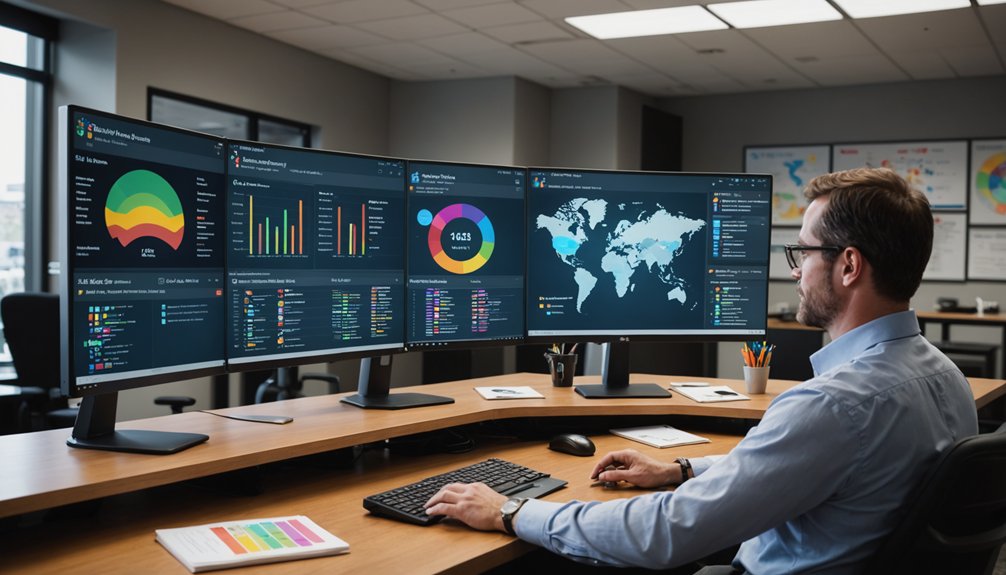
Successful businesses must now maintain an active presence across multiple review platforms to meet evolving consumer expectations. With 81% of consumers checking Google reviews and significant traffic on 5-7 other platforms, you’ll need an all-encompassing approach to build trust across channels.
Focus on generating authentic reviews consistently, as 92% of consumers expect 4+ star ratings before engaging with your business. You’ll boost customer engagement by 56% when you respond to reviews across all platforms. Consider using automated tools like WiserReview to streamline your review collection process while maintaining authenticity.
Don’t forget visual content – 43% of Gen Z and 39% of Millennials seek photo evidence in reviews. Integrate your review strategy with social media to amplify visibility and create multiple trust signals for potential customers.
Video Reviews and Next-Generation Customer Feedback
Video reviews have revolutionized how customers evaluate local businesses, with 76% of consumers now relying on video content for their purchase decisions. These visual testimonials drive 157% more organic traffic and make pages 53 times more likely to appear on Google’s first page.
To maximize your video review strategy’s impact on local SEO, focus on these key elements:
Strategic video review optimization drives local SEO success when you focus on essential elements that maximize visibility and engagement.
- Integrate AI-powered tools to analyze video reviews for sentiment and service mentions
- Encourage customers to include photo and video evidence of their experience
- Optimize video titles and descriptions with localized keywords
- Maintain fresh content across multiple formats (stories, clips, detailed reviews)
With 91% of consumers saying video reviews influence their emotional connection to businesses, and 78% of mobile searches leading to offline purchases, video testimonials are essential for local SEO success.
Frequently Asked Questions
How Can Businesses Detect and Address Fake Reviews Effectively?
You’ll need a multi-layered approach combining AI tools and manual oversight. Implement machine learning algorithms to analyze review patterns, sentiment, and user behavior with up to 96% accuracy. Watch for red flags like generic language, extreme ratings, and suspicious profiles. Train your staff to verify purchase history and cross-reference customer data. Don’t forget to establish clear policies aligned with regulatory requirements for handling fake reviews.
What Legal Implications Exist for Businesses Purchasing or Incentivizing Reviews?
You’ll face severe penalties if you purchase or incentivize reviews without proper disclosure. Under the DMCCA, you risk fines up to £300,000 or 10% of your global turnover for fake or undisclosed incentivized reviews. You must clearly label any commissioned or incentivized content to avoid legal trouble. If you’re offering incentives, make certain they’re transparent and don’t require positive feedback to comply with both UK and FTC regulations.
How Long Do Negative Reviews Typically Impact a Business’s Online Reputation?
You’ll typically see negative reviews impact your business’s reputation for 1-3 years, with the strongest effects occurring in the first few months. Your response time matters – addressing negative feedback quickly can cut this duration considerably. While severe complaints about core products may linger longer, minor service issues tend to fade faster. Remember that 85% of consumers consider older reviews less relevant, so their impact naturally diminishes over time.
What Software Tools Best Integrate Review Management Across Multiple Platforms?
You’ll find Chatmeter and HiFiveStar leading the pack for multi-platform review management. Chatmeter excels with AI-powered responses and location-specific analytics, while HiFiveStar connects with over 30 review sites through a unified dashboard. For enterprise needs, ReviewTrackers offers deep integrations and customizable analytics. If you’re managing social media reviews too, Sprout Social’s unified inbox consolidates everything into one streamlined platform.
How Do Seasonal Business Fluctuations Affect Review Management Strategies?
You’ll need to adjust your review management strategies to match seasonal business patterns. During peak seasons, increase your review solicitation efforts and staff resources to handle higher response volumes. In slower periods, focus on analysis and planning. Align your review campaigns with seasonal promotions, local events, and inventory changes. Use automated tools to maintain consistent engagement when business activity fluctuates, and adapt your solicitation messaging to reflect seasonal offerings.
Conclusion
You’ll need to adapt quickly to the evolving review landscape in 2025, where consumer trust hinges on quality feedback. Focus on maintaining a strong Google Reviews presence, actively respond to customer comments, and integrate video testimonials into your strategy. By prioritizing review management across platforms and fostering authentic engagement, you’ll boost your local SEO performance and capture more mobile-first customers.
