
Google Ads Copy Optimization is essential for boosting your digital advertising campaigns. You must integrate relevant keywords, highlight your unique selling points, and test various ad variations to improve relevance and attract the right audience.
You can greatly enhance ad effectiveness and user engagement by utilizing ad extensions, customizers, and strategic calls to action. But there’s more to it—aligning your landing pages with your ad copy and continuously monitoring and refining your campaigns can lead to higher click-through rates and conversions. So, how do you master each of these elements effectively?
Key Takeaways
- Integrate relevant keywords into ad copy to improve ad relevance and attract targeted traffic.
- Use ad extensions and ad customizers to enhance ad visibility and relevance.
- Regularly test and optimize various ad copy variations for better performance.
- Align ad copy closely with landing page content for a consistent user experience.
- Continuously monitor and refine CTAs to boost engagement and conversions.
Importance of Google Ads Copy

Google Ads copy is crucial because it directly influences your click-through rates, conversion rates, and return on ad spend (ROAS). When you optimize your ad copy, you’re crafting words and strategically impacting your entire Google Ads campaigns.
Tailoring your ad text to address specific pain points, such as emphasizing quality over cost or highlighting unique selling points, can help you attract the right audience. Understanding your audience targeting is key. Different users have different needs and preferences, and your ad copy should reflect that.
Effective keyword research helps you identify what your potential customers are searching for, allowing you to create ad text that resonates with them. This leads to higher conversion rates because the ad is relevant to their search intent. Moreover, your ad copy is crucial in the clicks and conversions you receive.
High-quality ad text can drive more qualified traffic to your landing pages, improving your overall campaign performance. Adhere to Google’s ad guidelines to maintain professionalism and quality while ensuring compliance with advertising policies. Remember, well-crafted Google Ads copy isn’t just about words but driving business results.
Writing Effective Ad Copy
How can you craft ad copy that captivates your audience and boosts your campaign performance? Start by integrating relevant keywords that match search queries. This increases ad relevance and improves your Google Ads quality score. Clearly explain your offerings and unique selling points to convince users to click. Highlight what sets you apart in a concise yet compelling way.
Testing different variations of your ad copy is essential for optimization. By experimenting with other messages, you can determine which version yields the best ad performance and conversion rate. Adherence to Google’s ad guidelines guarantees your ads are professional and maintain high quality.
Enhance your ads with ad extensions and ad customizers. These tools provide dynamic content and additional information, making your ads more relevant and engaging.
- Keywords: Match search queries to improve relevance.
- Unique Selling Points: Clearly explain what makes your offering special.
- Testing: Experiment with different versions to find the best-performing ad copy.
- Ad Extensions: Use to provide additional, relevant information.
Link your ad copy closely to your landing page to establish consistency and improve the user experience. This synergy boosts your conversion rate and overall ad group performance.
Key Best Practices

Mastering key best practices in Google Ads copy optimization can greatly enhance your campaign’s effectiveness and ROI. Start using ad extensions like site links, callouts, and structured snippets to give users more information and increase your ad’s visibility. These extensions make your ads more engaging and can lead to higher click-through rates.
Incorporate ad customizers to create dynamic content that adjusts based on the user’s search query, location, or device. This personalization makes your ad copy more relevant to each user, boosting engagement and conversion rates. Optimize your ad rotation settings to guarantee fair exposure for all ad variations.
This will help you identify which ads perform best without letting underperforming ads dominate the campaign. Use ad scheduling to control when your ads appear—target specific days, times, or events to maximize impact and budget efficiency.
To refine your Google Ads copy, regularly test ad variations and monitor performance metrics. Testing headlines, descriptions, and calls to action will reveal what resonates most with your audience.
Using Target Keywords
Consistently incorporating target keywords in your ad copy aligns your ads with the search terms users enter, enhancing relevance and boosting your Quality Score. Using the right keywords guarantees your ads are shown to the most relevant audience, leading to better engagement and higher conversion rates. To optimize your Google Ads copy, focus on these strategies:
- Use long-tail keywords: These phrases are more specific and often less competitive, helping you capture highly targeted traffic that’s more likely to convert.
- Update your keyword lists regularly. Monitoring and refining your keywords ensures you always target the most relevant and high-performing search terms.
- Implement negative keywords: Filter out irrelevant traffic by identifying terms that don’t align with your ad’s goals, improving overall targeting and ad relevance.
- Optimize for ad relevance: Make sure your ad copy reflects your target keywords. This will boost your Quality Score and make your ads more appealing to users.
Crafting Landing Pages
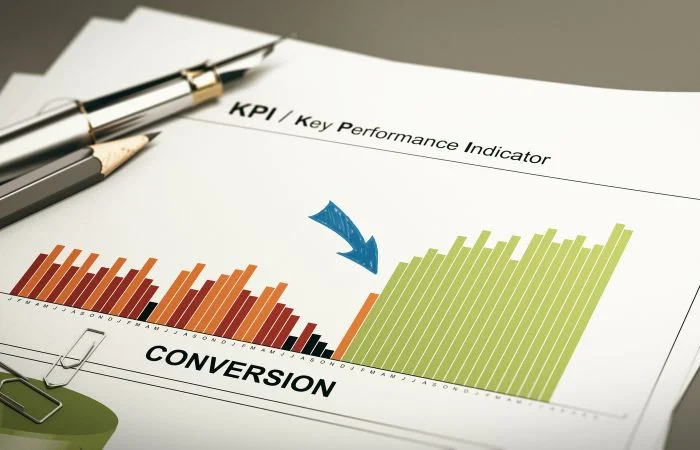
Your landing page’s design and content should seamlessly align with your ad copy to guarantee a consistent user experience and boost conversion rates. Matching your landing pages to your ad copy helps create a unified message, reinforcing the value proposition to your audience.
Conduct A/B testing on important elements like headlines, images, and calls-to-action (CTAs) to optimize performance. This helps you determine what resonates best with your audience. Ensure your landing page has clear and compelling content that effectively communicates your value proposition.
Users should immediately understand the benefits of your offer and feel motivated to take action. Also, prioritize a mobile-responsive design, as many users will access your landing page via mobile devices. A quick load speed is equally important, as slow pages can frustrate users and increase bounce rates. Here’s a quick checklist to optimize your landing page:
| Element | Optimization Tips |
|---|---|
| Design and Content | Align with ad copy for consistency |
| Headlines and Images | Use A/B testing to find the best combinations |
| Value Proposition | Communicate benefits |
| Mobile-Responsive | Ensure usability on all device types |
| Load Speed | Optimize for fast-loading |
Dynamic Keyword Insertion
Dynamic Keyword Insertion (DKI) lets your Google Ads automatically update ad text with the exact search terms users enter, making your ads more personalized and relevant. This feature can greatly enhance your ad copy by tailoring it to match what potential customers are actively searching for.
Integrating DKI into your Google Ads strategy will improve ad relevance and increase click-through rates. Consider how DKI can make your ads stand out:
- Ad Headlines: Your headlines will directly reflect the search terms, grabbing users’ attention.
- Ad Descriptions: Customizing descriptions ensures the content is precisely what users seek.
- Display URLs: Tailored URLs can give an additional layer of relevance, boosting user trust and engagement.
- Enhanced Personalization: Each ad feels uniquely crafted for the individual user, creating a stronger connection.
Think strategically about where to place keywords within your ad copy to make the most of Dynamic Keyword Insertion. Concentrate on high-impact areas like ad headlines and descriptions to create compelling, tailored ad experiences. This approach not only boosts user engagement but also maximizes the effectiveness of your Google Ads campaigns. Ultimately, DKI helps you deliver more personalized ad copy, leading to improved ad performance and greater click-through rates.
Essential Call to Action

Crafting compelling calls to action (CTAs) in your Google Ads is vital for driving user engagement and boosting conversion rates. These prompts encourage users to take immediate actions like purchasing or signing up, making them an important element of your Google Ads copy. Effective CTAs should be clear, concise, and relevant to the user’s intent.
Phrases like ‘Shop Now,’ ‘Sign Up Today,’ ‘Get a Free Quote,’ and ‘Learn More‘ are powerful examples that prompt action and yield higher click-through rates. The strategic placement of your CTAs can greatly impact their effectiveness. Positioning them near the beginning or end of your ad copy often results in better performance.
This strategic placement ensures that your audience doesn’t miss these critical prompts. Don’t forget the importance of testing CTAs. Experimenting with different phrases and analyzing performance data allows you to optimize campaigns for maximum engagement and conversions. By continuously refining your CTAs, you can better understand what resonates with your audience and drive conversions more effectively.
Ad Copy Examples
Building on the power of effective CTAs, let’s explore some compelling examples of Google Ads copy that can drive user engagement and conversions. Crafting ad copy that aligns with user intent and leverages features like dynamic keyword insertion and ad customizers can greatly boost your click-through rates and overall ad relevance. Consider these ad copy examples to optimize your Google Ads campaigns:
- Features and Benefits: Highlight your product or service’s unique features and direct benefits to instantly catch the user’s interest. For instance, ‘Save 30% on Eco-Friendly Home Products—Limited Time Offer!’
- Problem-Solution: Address a common problem your audience faces and present your solution. Example: ‘Tired of Slow Internet? Switch to Our Fast, Reliable Service Today!’
- Testimonials and Reviews: Use customer testimonials to build trust and credibility. An example is ‘Rated 5 Stars by 1,000+ Happy Customers. See Why They’re Raving!’
- Urgency and Scarcity: Create a sense of urgency to prompt immediate action. Example: ‘Only 5 Seats Left for Our Exclusive Webinar. Register Now!’
Testing variations of these ad copy approaches and avoiding common mistakes will help refine your messaging and improve the performance of your responsive search ads. By continuously optimizing, you’ll ensure that your Google Ads campaigns are engaging and effective.
Common Mistakes to Avoid

When optimizing your Google Ads, please don’t overload your copy with keywords, which can lower your ad quality. Ensure your ads are relevant to your target audience to boost your Quality Score. Ignoring these aspects can seriously impact your ad performance and effectiveness.
Overloading With Keywords
In today’s competitive digital landscape, overloading your Google Ads copy with keywords can seriously harm your campaign’s effectiveness. Keyword stuffing doesn’t just make your ads look spammy—it can also lead to lower ad quality scores and decreased ad relevance. Google’s algorithm penalizes excessive keyword usage, directly impacting your ad performance.
- Poor User Experience: When your ad copy is stuffed with keywords, it becomes hard to read and unappealing, driving users away.
- Lower Click-Through Rates: Ads filled with too many keywords often fail to engage users, resulting in fewer clicks.
- Weaker Ad Messaging: Excessive keywords can dilute your message, making it less compelling and less likely to attract potential customers.
- Reduced Campaign Success: Focusing on keyword stuffing rather than relevant keywords and compelling ad messaging can ultimately undermine your campaign’s goals.
Balancing keyword use with compelling ad messaging is crucial for optimizing Google Ads. Incorporate relevant keywords naturally to make sure your ads are engaging and user-friendly. This approach enhances the user experience and improves your ad quality scores and click-through rates.
Ignoring Ad Relevance
Disregarding ad relevance often leads to higher costs and poor campaign performance. When you overlook ad relevance, your Quality Scores suffer, causing your cost-per-click to rise. This makes Google Ads optimization challenging and less effective. It is vital to make sure that your ad copy aligns closely with your landing pages.
If users click on your ad and find the landing page mismatched, they’ll likely leave immediately, hurting your conversion rates. Ad relevance also plays a significant role in determining your ad rank and ad positioning. If your ads aren’t relevant, they’ll appear lower in search results, diminishing visibility and user engagement.
Regularly updating and aligning your ad copy with your target keywords and landing pages enhances ad relevance, leading to better ad rank and positioning. Additionally, monitoring your ad relevance is essential for maximizing ROI. Poor relevance means wasted ad spend and reduced campaign effectiveness.
Focusing on ad relevance ensures that your ads resonate with your audience, boosting user engagement and conversion rates. To optimize Google Ads, don’t overlook ad relevance. It’s a key factor in achieving higher performance, better ROI, and overall campaign success.
Optimizing for Performance
Regular optimization is essential to maximize the impact of your Google Ads campaigns, boost performance, and prevent budget wastage. A well-optimized Google Ads campaign isn’t just about setting and forgetting; it requires continuous attention and adjustments to improve ad copy, target the right audience, and increase conversions.
Utilizing tools like Google Analytics helps you track performance and make data-driven decisions, ensuring your ad spend is used effectively. Start by focusing on these key areas:
- Ad Copy: Update your ad copy regularly to remain relevant and engaging. A/B tests different versions to see which performs best.
- Audience Targeting: Refine your audience segments to reach those most likely to convert. Use insights from Google Analytics to better understand your audience.
- Click-Through Rate (CTR): Monitor and improve your CTR by creating compelling headlines and descriptions. High CTRs indicate that your ads are resonating with your audience.
- Ad Extensions: Ad extensions can provide additional information and make your ads more attractive, enhancing your ad’s visibility and performance.
Frequently Asked Questions
How Do I Optimize Google Ad Copy?
You optimize ad copy by doing A/B testing, using negative keywords, adding ad extensions, and focusing on Quality Score. You also refine bid strategy, conduct keyword research, optimize landing pages, manage ad rotation, target audiences, and track conversions.
How do you write a good ad copy for Google Ads?
To write a good ad copy, focus on your target audience and unique selling points. Use emotional appeal and a strong call to action. Don’t forget keyword insertion, ad extensions, mobile optimization, ad testing, visual elements, and competitor analysis.
What Is Copywriting in Google Ads?
Ad copywriting involves developing engaging text that focuses on your target audience, using emotional triggers and persuasive language. You must also guarantee brand consistency, integrate keywords, use effective headline strategies and call-to-action phrases, and conduct competitor analysis and ad copy testing.
How Does Google Ad Copy Work?
Google ad copy impacts your ad rank through keyword match, quality score, and audience targeting. Ad variations, extensions, and rotation influence click-through rate, impression share, and landing page relevance to maximize performance.
How Can Optimizing Google Ads Copy Improve the Effectiveness of Structured Snippets?
Optimizing Google Ads copy can significantly enhance the effectiveness of structured snippets. By implementing google ads snippet optimization tips, advertisers can create more relevant and engaging content that resonates with potential customers. This not only improves visibility but also drives higher click-through rates, ultimately leading to better campaign performance.
Conclusion
You’ve now got the tools to optimize your Google Ads copy. Focus on integrating target keywords, crafting compelling CTAs, and designing landing pages that align with your ads. Avoid common mistakes and always test different variations to see what works best. You’ll boost click-through rates and drive conversions by continuously monitoring and refining your campaigns. Stay proactive, keep learning, and watch your digital advertising efforts pay off!
Explore More Articles:
How to Run Google Ads for Clients: Best Practices and Tips
What Is Paid Media? Exploring Strategies for Digital Success
Website Migration 101: How to Successfully Move Your Site
